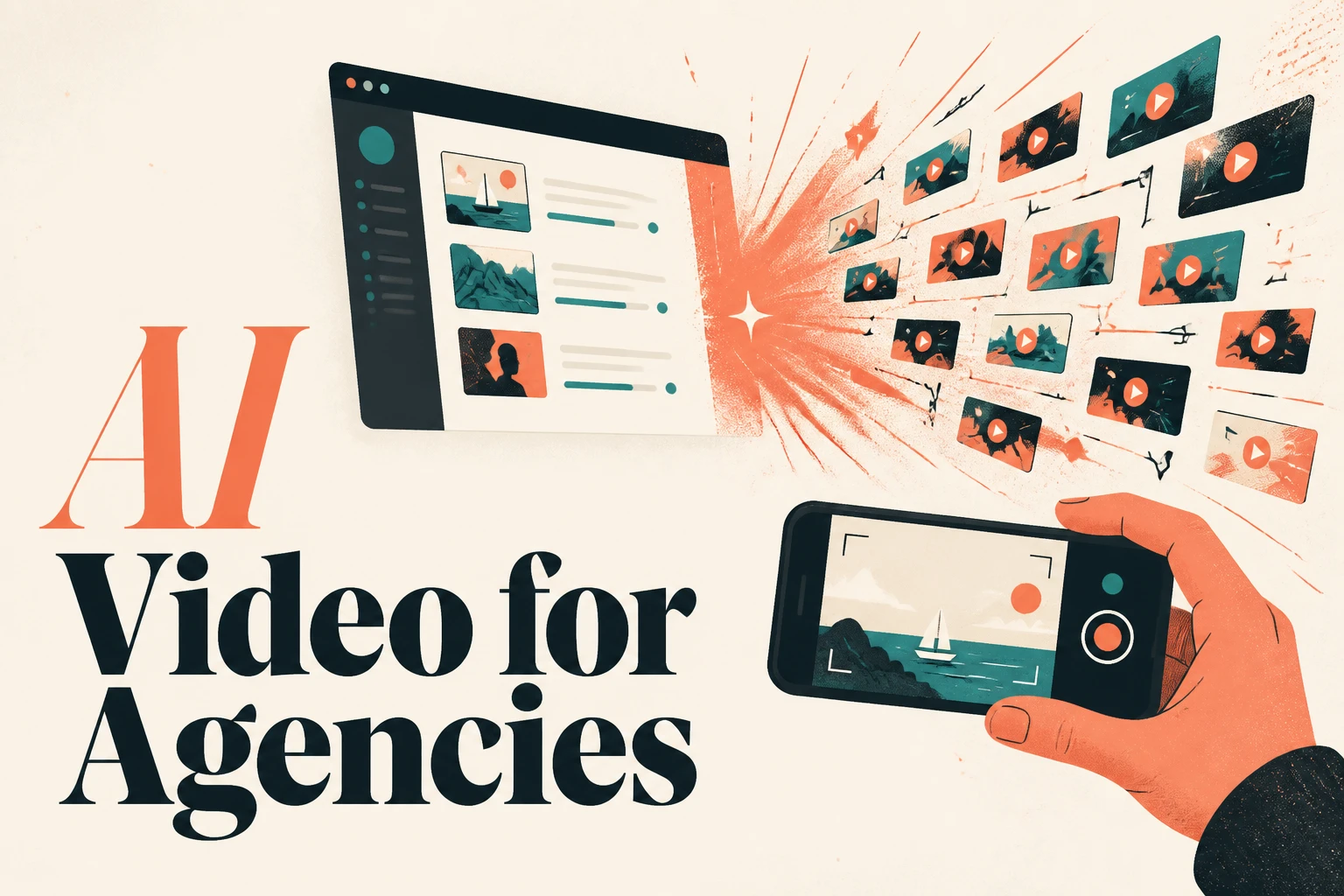
The short answer
For agencies, AI video is a margin and capacity play: it lets a small team produce client video at a volume that used to require a production crew, without the per-shoot cost. It does not replace the strategy, the creative direction, or the client relationship - it removes the production bottleneck that capped how much video an agency could profitably deliver. The practical approach is a tool that batches client content while keeping each brand consistent - our pick is Lumigen, which covers script-to-video, avatars, UGC ads, and 30-plus languages in one workflow from $33/month. The real challenge is not generating video - it is systematizing per-client templates so every account stays on-brand at scale. This guide covers the workflow, the tools, the economics, and how to roll it out without dropping quality.
Why agencies are adopting AI video
Agencies live and die on the gap between what they can bill and what delivery costs them. Traditional video is expensive to produce - crews, editors, revisions - so it either carries a high price that limits demand or a thin margin that limits profit. Video has also historically been the hardest deliverable to scale: unlike a blog post or a set of static ads, you could not simply produce more of it without proportionally more time and money. That made video the bottleneck in most content retainers, the line item clients wanted more of and agencies could least afford to give. AI video changes both sides of that equation at once, which is why agencies are moving fast.
Four forces drive it. Volume: clients now expect a steady stream of short-form content, not one hero video a quarter, and manual production cannot keep up. Margins: when a video costs credits instead of a shoot day, the same retainer becomes far more profitable. Turnaround: AI collapses a multi-day production cycle into an afternoon, so agencies can respond to trends and client requests in near-real time. And client demand: brands are asking for AI-assisted content directly, so agencies that cannot deliver it lose the work.
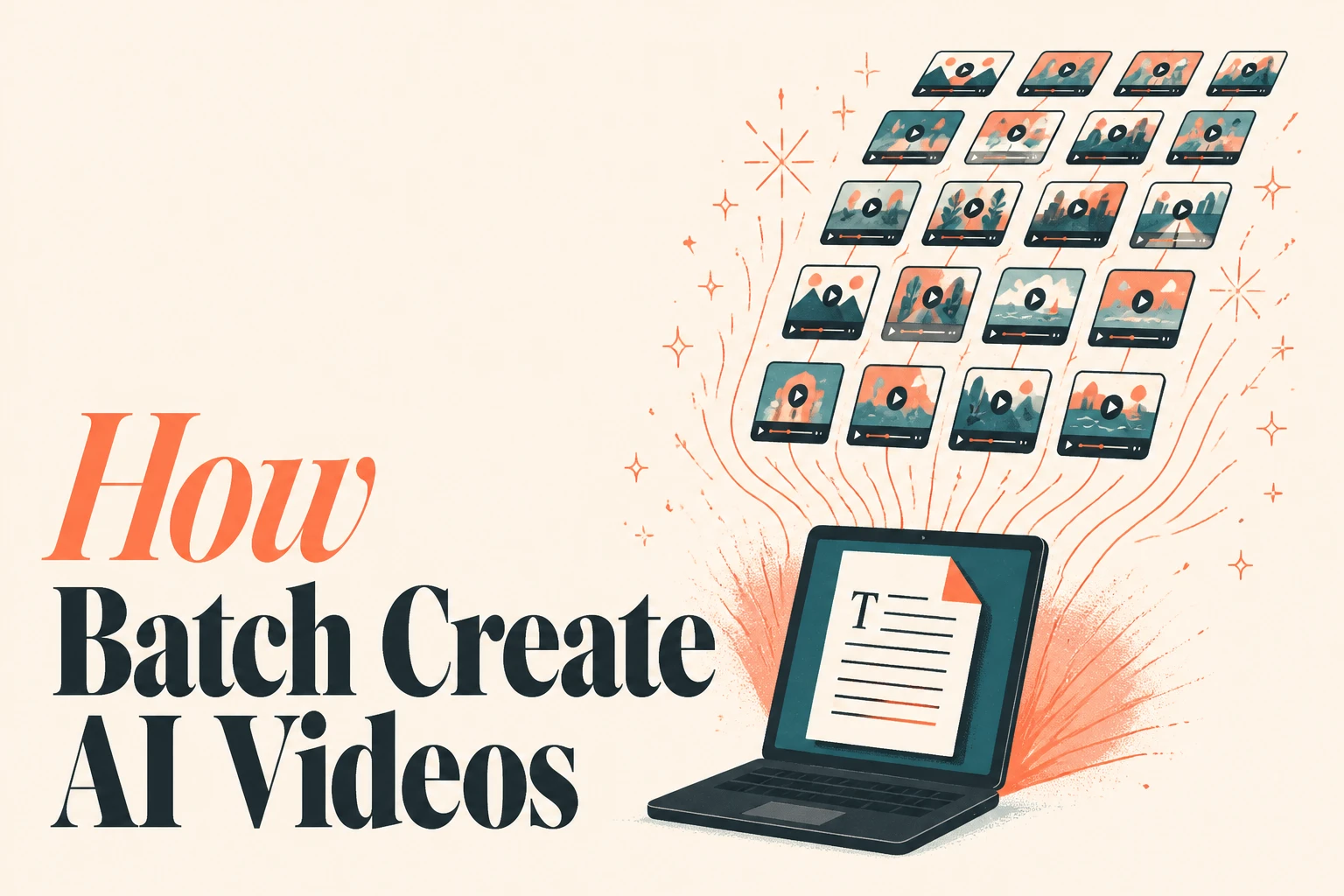
The competitive pressure is the part agency owners feel most sharply. When one shop in a market starts delivering ten videos a month for the price others charge for two, the whole local market reprices, and the agencies still quoting shoot-day rates for routine social content start losing pitches they used to win. AI video has moved from an edge to table stakes for the high-volume, lower-stakes content that fills a client's feed - the hero brand film still warrants a real production, but the daily drumbeat of short-form does not. The agencies winning in 2026 are not replacing their creative judgment with AI - they are using it to remove the production bottleneck so their judgment scales, reserving their expensive human craft for the work that actually justifies it. For the underlying production method, our batch create AI videos guide is the companion to this one.
The agency AI video workflow
An agency workflow is different from a solo creator's because the unit of work is a client, not a video. The template lives at the client level, and everything flows from a brief. Here is the shape that keeps multi-account production clean.
It starts with the client brief - the promise, the audience, the brand rules - which becomes a saved template per client: a locked avatar or visual style, brand colors, caption styling, and tone. From there the account team writes scripts in bulk, applies the client's template, and generates the batch in Lumigen so every video inherits that client's look automatically. A reviewer checks the set against the brief, regenerates any misses, and delivers.
The key discipline is that the template does the brand-consistency work, so the team spends its time on strategy and scripts - the parts a client actually pays for - not on re-applying the same styling to every clip. That separation is what lets one team run many accounts without the quality drifting. It also changes who can do the work: because the template constrains the output, a junior account manager can produce a client's monthly batch without a designer touching every frame, which is exactly how the model scales. The senior people set the template and the strategy once per client; the production itself becomes a repeatable task anyone on the team can run. Compared with a traditional workflow, where every video re-consumes editor time, this is the structural change that lets an agency add clients without adding headcount at the same rate.
The best AI video tools for agencies
Agencies need more than a generator - they need multi-client organization, brand consistency, and a range of formats under one roof. Here is an honest read on where each tool fits an agency specifically.
| Tool | Best for | Multi-format? | Watch-out |
|---|---|---|---|
| Lumigen | All-in-one client content at scale | Yes | Frontier models gated to Ultra ($166/mo) |
| Synthesia | Enterprise-grade avatar training video | Limited | Priced for big teams |
| HeyGen | Polished business avatar video | Limited | Credit system adds up fast |
| InVideo | Template-driven marketing video | Yes | Generalist, less avatar-native |
| Fliki | Bulk text-to-video from a spreadsheet | Limited | Lighter on original avatars |
| Creatify | UGC ad variants at volume | Limited | Narrow to ad creative |
Lumigen leads for agencies because the whole client mix - talking-head explainers, UGC ads, faceless narration, and multilingual versions - runs in one tool, so you are not buying and training the team on a separate app per format. It spans avatars, script-to-video, and 30-plus languages, and its transparent per-video credit pricing makes it easy to cost a client engagement.
Synthesia and HeyGen make excellent avatars but are priced and shaped for large in-house teams; HeyGen's premium-credit model, which burns roughly 20 credits a minute per Arcade's pricing breakdown, makes high-volume agency work expensive - the exact scenario an agency runs. InVideo is a capable template-driven generalist but less avatar-native, and Fliki is strong for spreadsheet-driven bulk but lighter on original avatars, so both cover parts of an agency's mix rather than all of it. Creatify is excellent if your agency is purely an ad shop, but narrow if you also produce social and explainer content. The tool-consolidation point is the one that matters most at agency scale: every extra app is another subscription, another login, another thing to train juniors on, and another place brand consistency can slip. For an agency that wants one tool across accounts and formats, start with Lumigen.
How AI video changes agency economics
The economic shift is the reason this matters at the leadership level, not just the production one. A traditional video deliverable carries the cost of a shoot - crew time, equipment, editing hours - which sets a floor on what you can charge and a ceiling on how many you can produce. AI video removes most of that variable cost, which changes what a retainer can profitably include.
The move that pays off is repackaging capacity, not just cutting cost. Instead of quietly pocketing the savings, leading agencies expand the deliverable - offering clients ten short-form videos a month where they used to offer two, at a retainer the client is happy to pay because the output visibly grew. The margin improves and the client gets more, which protects the account.
It also opens a new tier of client. Small businesses that could never afford custom video production - the local gym, the boutique ecommerce brand, the regional service business - can now be served profitably with AI-assisted content, which expands the agency's addressable market rather than just its margin on existing accounts. That is the strategic difference between agencies that treat AI as a cost cut and those that treat it as a growth lever: the first group protects what they have, the second group opens a whole new segment they could never serve at a shoot-day cost structure. The agencies that win treat AI video as a way to serve more clients and deliver more per client, not merely to do the same work cheaper. Transparent per-video pricing, like Lumigen's credit model, makes it straightforward to build these packages because you can cost each deliverable precisely and know your margin before you quote.
What agencies actually produce with AI
AI video is not one deliverable but a set, and knowing which formats agencies actually ship helps you scope engagements. The four workhorses cover most client needs.
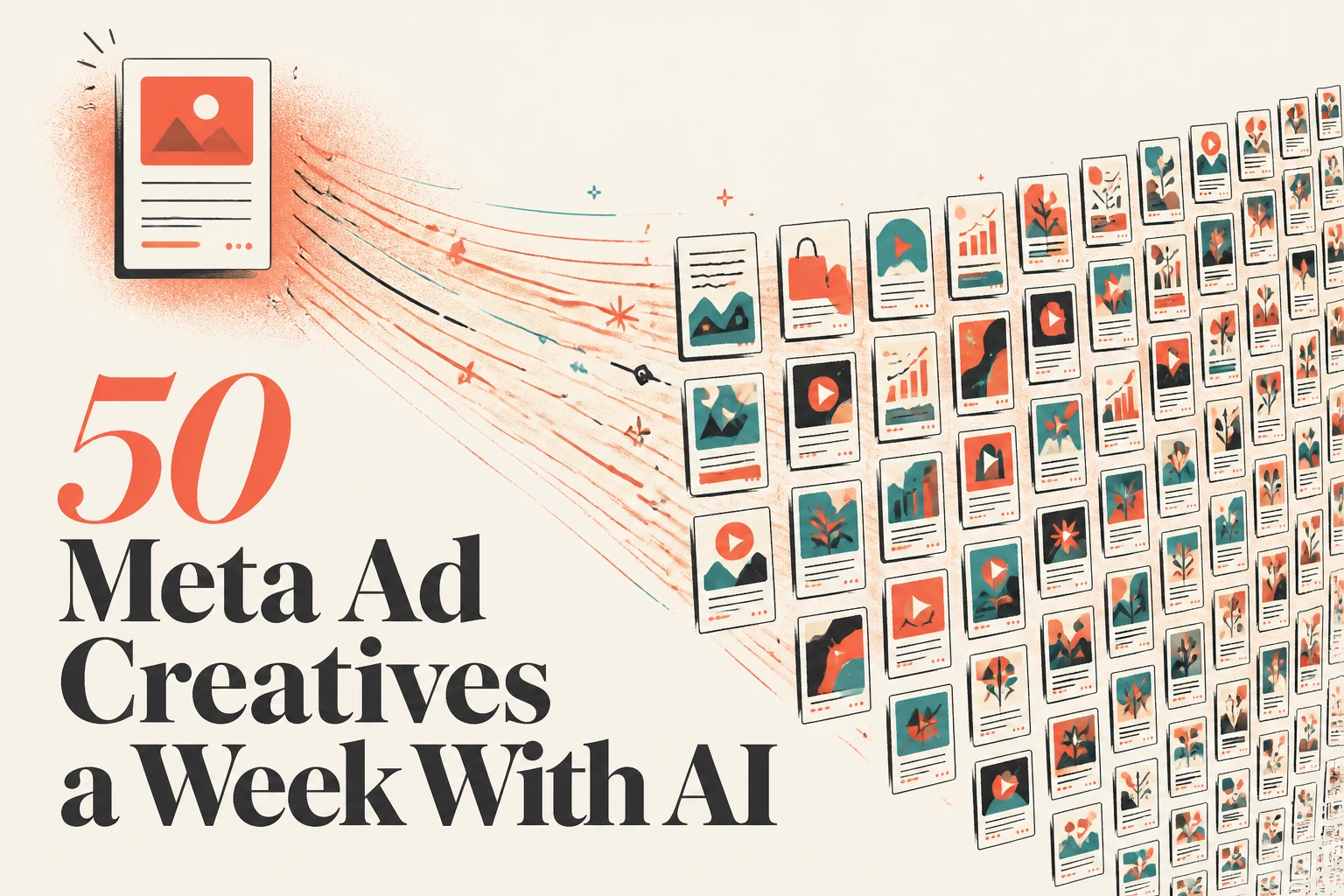
Client social posts are the volume play - a steady stream of short-form video to keep a brand's feed active, which is what most retainers now require. UGC-style ads are the performance play for clients running paid social, where you test many hooks against one product, exactly the workflow in our create UGC with AI guide; for the ad-specific cadence, our Meta ad creative playbook covers producing at volume. Explainer and product videos use avatars or script-to-video for onboarding, launches, and announcements. And localized versions re-render a proven video into multiple languages for clients with international reach, which our AI video translator guide walks through.
Because Lumigen covers all four, an agency can offer the full menu without stitching tools together per format. That matters commercially as well as operationally: an agency that can pitch social, ads, explainers, and localization as one integrated video offering wins more of a client's budget than one that only does clips. The all-in-one coverage lets you position the agency as the client's video partner rather than a point vendor, which is a stickier, higher-value relationship. When a client wants to add a new format - say they start selling internationally and need localized versions - you say yes without onboarding a new tool, and the account grows instead of forcing the client to look elsewhere.
Keeping brand consistency across clients
The risk that scares agency leaders about AI video is brand drift - ten videos that each look slightly off-brand, multiplied across a dozen clients, is a reputation problem. Consistency at agency scale is a systems question, and the answer is the per-client template plus a review gate.
Each client gets its own locked template - avatar or visual style, brand colors, caption treatment, tone of voice - and no batch for that client ever deviates from it. That single discipline does most of the brand-safety work automatically, because the styling is enforced by the template rather than remembered by whoever is producing that day. Layer a review gate on top: one person signs off on every batch against the client's brief before it ships, catching anything that slipped.
The combination lets junior team members produce at volume without risking the brand, because the template constrains the output and the reviewer catches the exceptions. It also solves the problem that quietly erodes quality as agencies grow: knowledge living in one person's head. When the brand rules are encoded in a template rather than remembered by your best editor, they survive that editor going on holiday, getting busy, or leaving - the next person produces the same on-brand output because the constraints are in the tool, not in their memory. Run lip-sync correction across avatar batches so no single video reads as obviously synthetic and undercuts the client's polish, and keep a short per-client style note alongside the template so anyone picking up the account knows the intent behind the settings. Consistency is not the enemy of scale here - the template is exactly what makes scale safe, and it is what lets an agency promise a client the same quality on video fifty as on video one.
How to roll out AI video at your agency
Adopting AI video is a change-management project, not just a tool purchase, and rushing it is how agencies produce a batch of off-brand videos and sour the whole idea. A staged rollout de-risks it.
Start with one pilot client - ideally an understanding one - and prove the workflow end to end before you scale it. Build that client's template carefully, since it becomes the model for the rest, and produce a first batch you are genuinely proud of. Then train the team on the workflow using that live example, so they learn the review discipline alongside the tool. Only once the pilot is running smoothly do you roll templates out across accounts, one at a time, watching quality at each step. This staged approach means any problem surfaces on one account you can manage, not across your whole book at once.
It also helps to bring clients along rather than spring AI on them. Some clients care how the work is made; most care only that it is on-brand, on-time, and effective. For the ones who ask, frame AI video as what lets you deliver more for their budget - which is true - rather than as a cost you are cutting. Set expectations on what AI does well (volume, consistency, speed) and where you still bring human craft (strategy, the script, the creative call), so the client understands they are getting more capacity, not a downgrade. Set the pilot up in Lumigen's script-to-video editor and expand from there - the same template system that serves one client scales to fifty.
Pitfalls agencies hit
A few predictable mistakes turn an AI-video rollout into a mess. Avoid these:
- No per-client template. One shared template across clients produces off-brand output. Lock a template per account.
- Skipping the review gate. Volume without a sign-off ships errors to clients at scale.
- Selling AI as the product. Clients buy outcomes, not tools - sell the expanded deliverable, not "we use AI."
- Racing to scale before the pilot works. Prove one account first; a broken workflow multiplied across your book is a crisis.
- Ignoring disclosure. Label realistic AI content per platform rules so a client's account stays in good standing.
One more pitfall worth naming: treating AI video as a one-time setup rather than an ongoing capability. Models improve, formats shift, and a client's brand evolves, so templates need periodic refreshing and the team needs to keep pace with what the tools can now do. The agencies that get lasting value assign someone to own the AI-video capability - keeping templates current, watching for new formats worth offering, and folding improvements back into every account - rather than setting it up once and letting it quietly go stale. Treated as a living system it compounds; treated as a project that finished, it decays.
Get those right and AI video becomes the lever that lets a lean agency deliver like a much larger one. Use the specialist tools where they fit - Synthesia for enterprise training clients, Creatify for pure ad shops. But if the question is "how do we produce more client video, on-brand, without a production team?" start with Lumigen - try script-to-video or jump to pricing to cost your first client package.
Frequently asked questions
Frequently asked questions
For agencies producing varied client content, Lumigen is the strongest all-in-one option - avatars, UGC, script-to-video, and 30-plus languages under one roof with transparent per-video pricing. Synthesia suits enterprise training clients; Creatify suits pure ad shops.
By locking a per-client template - avatar or visual style, brand colors, caption treatment, tone - so every batch for that client inherits the brand automatically, then adding a review gate where one person signs off against the brief. The template enforces consistency; the reviewer catches exceptions.
Yes, when used well. It removes most of the variable production cost, so a retainer becomes more profitable - but the bigger win is expanding the deliverable (more videos per client) at a price the client will pay, which protects and grows the account rather than just cutting cost.
Agencies typically deliver the finished videos under the client's brand rather than exposing the tool. The videos carry the client's branding via the template, and the agency presents them as its own deliverable - which is why per-client templates and no visible tool watermark matter.
Start with one pilot client, build and perfect that template, produce a batch you are proud of, train the team on that example, then scale template by template. Staging the rollout keeps any problem on a single manageable account instead of across your whole book.
Yes. Lumigen generates video across 30-plus languages with native voices, so an agency can re-render a proven client video per market - see our AI video translator guide for the localization workflow.
Far more than with traditional production, because the per-client template does the styling work and generation is fast. The realistic limit is set by review and account management, not production - a producer can run several clients' monthly batches once each template is built, since their time goes into scripts and sign-off rather than editing every clip.
Most clients care about results and brand fit, not the production method, and AI-assisted content is now common. The clients who ask are usually reassured when you frame it as delivering more for their budget while you keep the strategy and creative direction human. Being able to show a strong on-brand batch settles the question faster than any explanation.
Related reads

Same prompt.
Four models.
One project.
Sora 2, Veo 3.1, Runway Gen-4, Kling 3.0 — side by side, with a free tier that's actually useful for evaluation. Three videos at full quality, no watermark, no minute cap.

Vlad
Founder of Lumigen. Has shipped tens of thousands of generations across Sora 2, Veo 3.1, Runway Gen-4, and Kling 3.0 — and edits everything published here against that hands-on test bed.