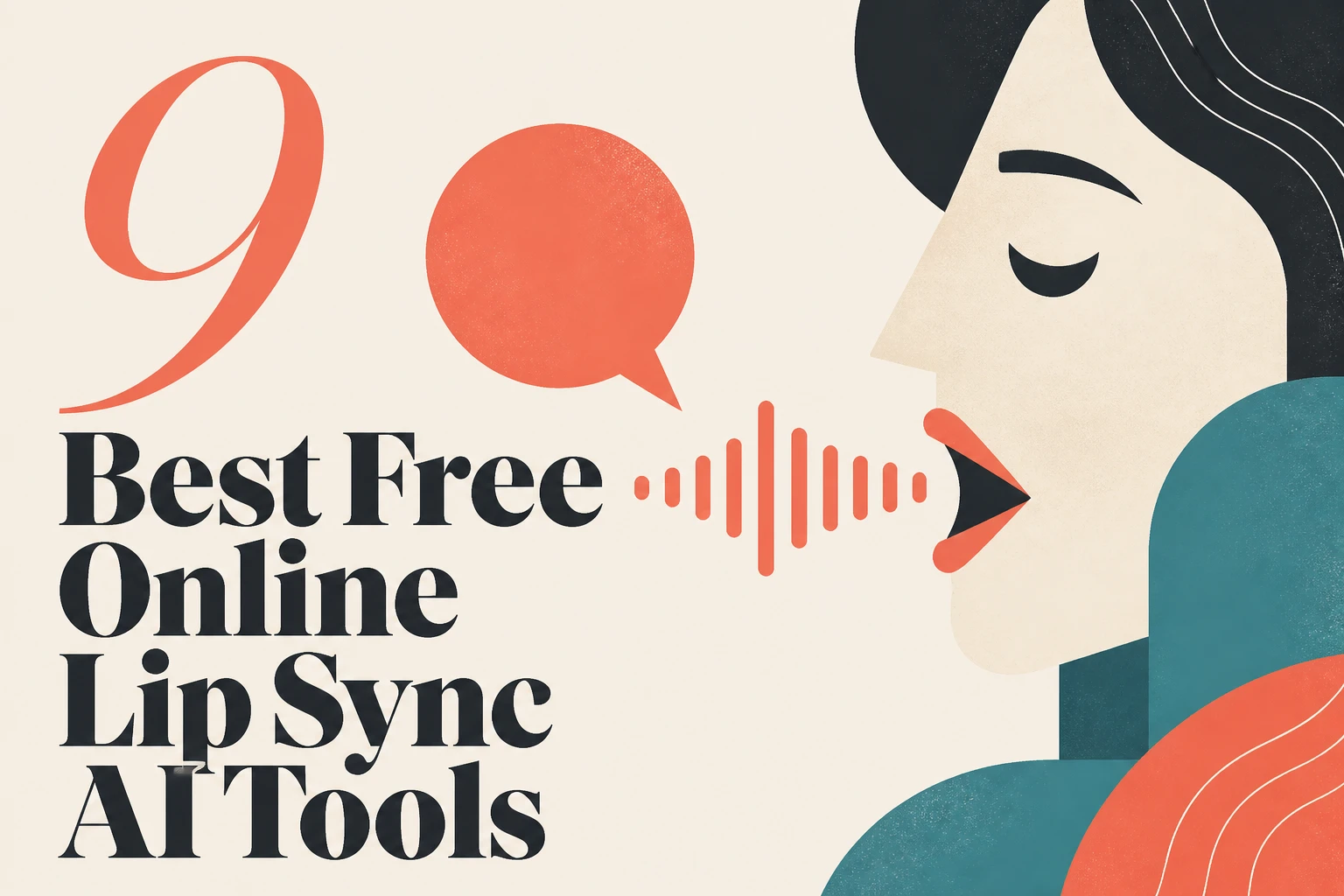
Free online lip sync AI in one paragraph
The best free online lip sync AI in 2026 depends on what "free" has to cover. For a one-off clip with no account, LipSync.video and Magic Hour win - both run in the browser, skip the sign-up wall, and export without a watermark on their free path. For lip sync that has to live inside a finished video - script, voice, avatar, captions, export - a single-purpose free tool is the wrong shape, and Lumigen is the stronger starting point even though it is paid. This guide ranks 9 tools by what their free tier actually does: who needs an account, who stamps a watermark, how long a clip you get, and where each one breaks.
How we ranked these lip sync AI tools
Most "best free lip sync AI" lists rank tools by brand recognition. We ranked them by what the free tier does when you actually use it. In June 2026 we opened each tool's live free path and checked four things that decide whether "free" is real or a teaser:
- Sign-up wall - can you generate a clip with no account, or does the free tier gate behind email?
- Watermark - does the free export ship clean, or branded?
- Clip ceiling - how long a video you can lip sync before the paywall, plus resolution caps.
- Input model - photo-to-talk, video re-sync, or full script-to-video, since these solve different jobs.
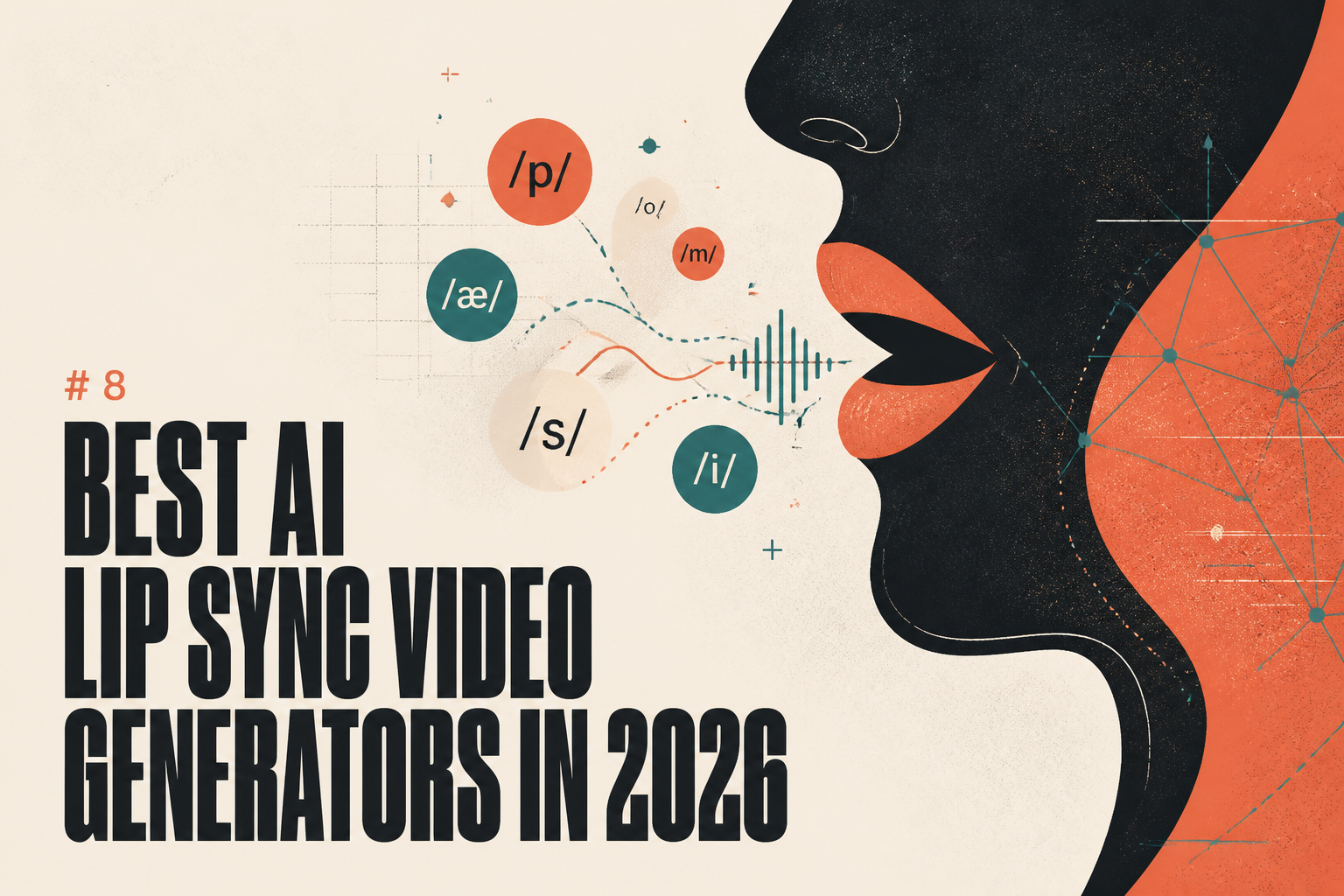
A "lip sync AI" can mean three different products: a tool that animates a still photo to match audio, a tool that re-syncs an existing video clip to new speech (dubbing), or a full generator that builds the video and syncs the avatar in one pass. The free online tools below cluster in the first two; the generators sit in the third. We flag which is which, because picking the wrong category is the most common reason people bounce off a "free" tool and still end up with nothing usable.
| Tool | Free tier | Watermark | Best for |
|---|---|---|---|
| Lumigen | Paid (from $33/mo, no free tier) | None on paid | Lip sync inside a full video workflow |
| LipSync.video | Yes, no sign-up | None | Quick no-account clips |
| Magic Hour | Yes, ~3/day, no account | None on free path | Daily free quota |
| Kapwing | Free to start (freemium) | On free export | Browser editing + dubbing |
| Vozo.ai | Freemium | On free export | Online dubbing + re-sync |
| LipSync.studio | Free tier, long clips | Varies by tier | Singing + longer clips |
| HeyGen | Free tier (limited credits) | On free | Talking-avatar lip sync |
| sync.so | API credits (dev) | N/A | Developers + visual dubbing |
| Freebeat.ai | Freemium | On free | Music and dance lip sync |
"Free" usually means free to generate, not free to use. Several tools below let you make the clip at no cost, then stamp a logo on the export unless you upgrade. We mark each tool's real watermark policy so you do not find out after rendering.
What AI lip sync can and cannot do in 2026
Modern lip sync AI descends from Wav2Lip, the 2020 model from researchers at IIIT Hyderabad that first made audio-driven mouth movement convincing on arbitrary faces (the paper is public on arXiv). Six years on, the free tools here are well past that baseline - but they still share its failure modes, and knowing them saves you a wasted render.
What works reliably now: clear, front-facing speech at a normal pace, in one language, on a high-resolution face. That covers most talking-head and presenter content, which is why avatar tools look so clean in demos. What still breaks: fast or overlapping speech, hard plosives (the p and b sounds where the lips should fully close), side angles where the mouth is partly hidden, and singing, where sustained vowels and quick consonants trip most models. Those are exactly the cases where a free tier's quality gap shows.
In our June 2026 checks the pattern was consistent: every tool nailed a slow, scripted, front-facing clip, and the differences only appeared on the hard inputs - a rap verse, a clip with two speakers, a 30-degree head turn. So here is the practical test to run before you commit to any tool below: feed it your hardest clip, not your easiest, because the easy one always looks fine. It is also why "lip sync inside a generator" wins for production work - when Lumigen builds the avatar and voice together, it controls the input quality instead of inheriting whatever footage you upload.
1. Lumigen: Best for lip sync that has to be part of a real video
Best for: creators who need lip sync as one step in a finished video, not a standalone clip Strongest use cases: script-to-video, AI avatars, voiceover, dubbing, short-form ads, faceless YouTube Starting price: $33/mo (Starter, annual) - no permanent free tier. See pricing.
Why Lumigen is the best pick when lip sync is not the whole job
Most tools on this list do one thing: take audio plus a face and return a lip-synced clip. That is perfect when lip sync is the deliverable. It is the wrong tool when lip sync is step four of seven. Lumigen treats lip sync as part of a full pipeline - you write or paste a script, generate a voice, pick an AI avatar, and the mouth movement is corrected as the video is built, not bolted on afterward. That matters because the hardest lip-sync failures show up at the seams: a re-synced clip that drifts when you cut to b-roll, or a talking-head that desyncs after you trim a pause. Building the whole video in one place is how you avoid the "the preview looked fine but the export drifted" problem that fills competitor reviews.
The honest tradeoff: Lumigen is not free, and it has no permanent free tier, so if you only need a single clip today, scroll down to LipSync.video or Magic Hour. Lumigen earns the top slot here for the larger job - turning a script into a publish-ready video where the lip sync is one correct detail among many.
What makes Lumigen uniquely strong
Beyond lip sync, Lumigen covers script-to-video, 50+ AI avatars, voice generation across 30+ languages, UGC ad creation, motion control, image generation and editing, and frontier video models (Veo 3.1, Kling 3.0, Sora 2 Pro until its September 2026 sunset) on the Ultra tier - in a single workflow. The lip-sync correction is not a separate product you stitch in; it runs against the avatar you already chose, with the voice you already generated. For bilingual creators the payoff compounds: generate the voiceover in another language and the mouth shapes are matched to that audio, not to your original recording.
How to use Lumigen for lip-synced video
Here is the workflow we would use to ship a lip-synced talking video:
- Paste your script into the script-to-video editor.
- Pick a tier - Growth ($58/mo) for ElevenLabs voices and standard models, Ultra ($166/mo) for frontier output. See pricing for credit math.
- Choose an AI avatar (50+ options) or upload your own footage.
- Generate the voice from 50+ options across 30+ languages.
- Let Lumigen build the scene with lip-sync correction applied to the avatar.
- Refine - caption styling, re-roll a scene, fix any residual drift.
- Export 9:16, 1:1, or 16:9 for the channel you are posting to.
The goal is not one perfect clip. It is a repeatable way to ship lip-synced video on a schedule.
Where Lumigen falls short
- No free tier. Every tool ranked 2 through 9 below has a free path; Lumigen does not. For a single throwaway clip, that is a real reason to pick something else.
- Overkill for photo-to-talk. If you only want to animate one still image to audio, a focused tool like LipSync.video does it faster with less setup.
- No native clip extraction. Lumigen generates original video; it does not chop a long recording into synced shorts the way a clip extractor would.
- Frontier models gated to Ultra. The best output quality (Veo 3.1, Kling 3.0) sits at $166/mo, which prices out hobby budgets.
Lumigen capabilities for lip-synced video:
- Script-to-Video - paste a script, get a finished video with voice and synced avatar
- AI Avatars - 50+ avatars with lip-sync correction built in
- UGC Ads - creator-style ad variants with synced speech
- Motion Control - fix motion and timing artifacts
- Voices - 50+ AI voices across 30+ languages, ElevenLabs on Growth+
Is Lumigen the right lip sync tool for you?
If you need a single clip and nothing else, no - use a free tool below. If lip sync is one step in making real videos week after week, start with the script-to-video editor and check pricing to match a plan to your volume.
2. LipSync.video: Best genuinely free, no sign-up
LipSync.video is the closest thing to "free lip sync AI online, no catch." It runs entirely in the browser, needs no account to generate a clip, and exports without a watermark - the three things most tools fail on. You upload a face (photo or video) and audio, and it returns a synced clip you can use anywhere. For creators who searched "lip sync ai online free no sign-up" and meant it literally, this is the answer.
The limits are the usual free-tier ones: shorter clips, queue waits at busy times, and quality that is solid for talking-head content but not frontier-grade on fast or emotional speech. There is no script generation, no voice library, no editing suite - it does one job. In practice that one job is the most common one: take a headshot or a short clip, sync it to a voiceover, and post it. If your input is a clean front-facing face and your audio is paced like normal speech, the output holds up well enough for social posts; push it with a fast script and the mouth shapes soften, which is the trade you accept for a no-account free tool.
vs Lumigen: LipSync.video wins on zero-friction free access for a single clip. Lumigen wins when that clip needs to be part of a scripted, voiced, multi-scene video - its script-to-video flow covers the whole job, not just the sync.
3. Magic Hour: Best free daily quota
Magic Hour gives you roughly three free lip syncs per day with no account required, which makes it the best pick if you want repeat free use rather than a single clip. Like LipSync.video it is browser-based and skips the sign-up wall on its free path. The daily quota resets, so for low-volume creators it can functionally stay free.
Magic Hour also bundles other AI video tools (image-to-video, video effects), so it doubles as a light all-rounder. The free tier still caps clip length and resolution, and heavier use pushes you toward a paid plan quickly, but for a few clips a day it holds up. The daily-reset model is the real differentiator here: where most free tiers give you a fixed lifetime allowance and then a hard wall, Magic Hour's quota refills, so a creator posting one synced clip a day can stay on the free path indefinitely. The catch is planning around the cap - you cannot batch a week of content in one sitting.
vs Lumigen: Magic Hour wins on a recurring free quota with no commitment. Lumigen wins on output you can scale - once you are making more than a handful of videos, the per-credit math and the full workflow beat juggling a daily free cap.
4. Kapwing: Best free-to-start browser editor
Kapwing folds AI lip sync into a full browser-based video editor, which is its real advantage: you can sync, then trim, caption, and arrange in the same place. Its lip sync is built for dubbing - re-syncing a clip to translated or replaced audio - so it shines when you are localizing existing footage rather than generating new video.
Kapwing is freemium, not free-forever. The free tier lets you start and learn the tool, but exports on the free plan carry a Kapwing watermark and longer projects hit limits. It is the best option if you want lip sync plus light editing without leaving the browser.
vs Lumigen: Kapwing wins as an editor for footage you already have. Lumigen wins when you need to create the footage - its avatars and script-to-video generate the talking video Kapwing would expect you to bring.
5. Vozo.ai: Best for online dubbing and re-sync
Vozo.ai leans into dubbing: take an existing video, swap the audio (often in another language), and re-sync the lips to match. That makes it a strong free-to-try option for creators localizing content for multiple regions. It runs online with no install and bundles editing and translation features around the core sync.
The free tier is a trial of a paid product - expect a watermark and length caps on free exports, with the better quality and longer clips behind a subscription. For a quick test of "can AI re-sync this dub convincingly," it is worth a run.
vs Lumigen: Vozo wins on re-syncing video you already filmed into a new language. Lumigen wins on generating multilingual video from scratch - pick a voice in 30+ languages and the avatar is synced to that audio natively, no source footage required.
6. LipSync.studio: Best for longer clips and singing
LipSync.studio stands out for clip length - its free tier advertises talking and singing videos up to around 10 minutes at 4K, far longer than most free competitors that cap you at 30 to 60 seconds. The singing support is genuinely useful for music creators who want a face to match a track, a job most lip-sync tools handle badly.
Longer free clips usually come with tradeoffs: render queues, quality that softens on fast lyrics, and tier-dependent watermark and resolution rules you should confirm before relying on it. But for a long talking or singing piece on a budget, it is the standout.
vs Lumigen: LipSync.studio wins on long, free, single-take clips and music. Lumigen wins when the long piece needs structure - scripted scenes, captions, b-roll - which its create-video flow assembles rather than leaving you one long take.
7. HeyGen: Best for talking-avatar lip sync
HeyGen is an avatar-first platform with a free AI lip sync tool that creates talking avatars from text or audio. Its lip sync is among the most polished for presenter-style content, which is why it ranks high for "talking head" jobs. The free tier gives you limited monthly credits and a watermark, with realistic avatars and longer videos gated behind paid plans.
HeyGen leans enterprise and L&D - corporate training, explainers, multilingual presenters - so its pricing and feature framing target teams more than solo short-form creators. For a free taste of avatar lip sync it works; for ongoing creator volume the credits run out fast.
vs Lumigen: HeyGen wins on polished standalone presenter avatars. Lumigen wins on breadth at a creator price point - avatars plus UGC ads, short-form export, and frontier models in one tool rather than an avatar-only product.
8. sync.so: Best for developers
sync.so (sync labs) is the developer's pick - it offers lip sync and visual dubbing through an API, so it fits teams building lip sync into their own apps rather than clicking through a web tool. The output quality is high and the dubbing is among the best for matching mouth shapes to replaced audio.
It is not a free consumer tool in the usual sense: access runs on API credits, and the value is the programmatic control, not a one-click browser flow. If you are a creator who just wants a clip, this is the wrong door; if you are an engineer wiring lip sync into a product, it is the right one.
vs Lumigen: sync.so wins for developers embedding lip sync via API. Lumigen wins for creators who want a finished video without writing code - the script-to-video workflow is the no-code path to the same outcome.
9. Freebeat.ai: Best for music and dance lip sync
Freebeat.ai focuses on music-driven video - lip syncing a face to a song and generating dance and music visuals. For musicians and creators making lyric or performance videos, the music orientation is a real fit that general tools miss. It is freemium, with free generation and a watermark or length cap on the free path.
Like the other single-purpose tools, it does its one thing well and nothing else - no script generation, no broad avatar library, no multi-format editing suite. For a music video lip sync on a budget, it earns its spot.
vs Lumigen: Freebeat wins on music-video lip sync specifically. Lumigen wins on everything around it - if the music video is part of a content schedule that also needs short-form ads and script-driven videos, the all-in-one beats a music-only tool.
How to choose a free lip sync AI tool
Match the tool to the job, not the brand. Three questions settle it:
Do you need a clip or a video? A clip is one synced face plus audio - LipSync.video, Magic Hour, or Freebeat handle that free and fast. A video is scripted, voiced, multi-scene, and recurring - that is where a generator like Lumigen earns its cost despite the lack of a free tier.
Are you creating or localizing? If you have footage and want to re-sync it to new or translated audio, dubbing-first tools (Vozo, Kapwing, sync.so) are built for that. If you are starting from a script with no footage, you need generation, not dubbing - and most free tools cannot generate.
Will "free" survive contact with the export? This is the one that catches people. Free generation plus a watermarked or length-capped export is a trial, not a free tool. LipSync.video and Magic Hour are the cleanest genuinely-free paths today; the rest are freemium teasers you will outgrow. If you already know you will outgrow free, starting with a paid workflow like Lumigen's can save the migration later.

Same prompt.
Four models.
One project.
Sora 2, Veo 3.1, Runway Gen-4, Kling 3.0 — side by side, with a free tier that's actually useful for evaluation. Three videos at full quality, no watermark, no minute cap.

Vlad
Founder of Lumigen. Has shipped tens of thousands of generations across Sora 2, Veo 3.1, Runway Gen-4, and Kling 3.0 — and edits everything published here against that hands-on test bed.