Executive summary
The best Creatify alternative for AI UGC ads in 2026 depends on whether you need ad-variant scale, avatar realism, or a workflow that goes beyond UGC into faceless and avatar-led video. For DTC operators running Meta paid social and needing 30-50 UGC ad variants per week from a product photo, Lumigen is the strongest end-to-end pick because it covers UGC, script-to-video, AI avatars, and frontier video models (Veo 3.1, Kling 3.0, Sora 2 Pro until its September 24, 2026 API sunset) in one workflow at $33-$166/month. Creatify's $19 Starter and $49 Pro tiers are competitive on price but the Pro tier caps videos at 10 minutes and the ad-variant batch mode is gated to Pro+. For UGC-only specialists, Arcads has the strongest premium-actor library; for budget-tier UGC at scale, MakeUGC and Tagshop AI ship faster per dollar. Below: the 9 alternatives we tested, with what each one wins on and where each falls short.
Why look for a Creatify alternative
Creatify is a strong specialist tool, but the most common operator complaints in 2026 cluster around five gaps. Knowing which one you're hitting tells you which alternative to pick.
Credit math gets expensive at volume. Creatify's video credits range from 2-20 per ad depending on quality settings, and Pro-tier demo-quality output sits at the upper end. A DTC brand running 30 ad variants per week at 15 credits each consumes 1,800 credits/month - well past the Pro tier's allowance. The next step up is enterprise pricing, which is custom-negotiated.
The avatar library is narrow for niche personas. Creatify ships ~300 avatars on Free and 700+ on Pro. For mainstream DTC personas (millennial woman holding skincare, Gen Z guy demoing tech), this is sufficient. For niche personas (older male demoing financial tools, multilingual creator delivering in Brazilian Portuguese), the library thins out.
Output ceiling at 10-minute videos on Pro. Creatify is purpose-built for short UGC ad creative (15-60 seconds). If you also need longer-form ads (60-90 second testimonial-style ads, 3-5 minute explainer demos), Pro caps you at 10 minutes and the tool is not optimized for that length.
No native script-to-video or avatar-led workflow. Creatify is UGC-actor first. If you want a full video pipeline (script-to-video for product launches, AI avatars for explainer ads, frontier-model cinematic visuals for hero campaigns), you're stitching multiple tools together.
Watermark on the free tier blocks testing at scale. The Free Plan's 10 monthly credits include a watermark on exports, making it useful for a single test but not for the rapid-iteration loop most performance marketers want before committing to paid.
Each of these gaps maps to a different alternative below. Pick the one that fixes your specific bottleneck.
How we tested
We ran 14 standardized UGC ad briefs across all 9 tools over Q1 and Q2 2026. Each brief specified: a real Shopify product (no enterprise mockups), a 30-45 second target length, three required avatar personas (millennial woman, Gen Z guy, older male in glasses), and an A/B testing requirement (3 variants per brief minimum). We tracked: time-to-first-export, output quality on a 1-10 internal scale, total cost per finished ad, and whether the tool could handle a multilingual variant (Spanish, Portuguese, German) without a separate dub pass.
The headline numbers across all 14 briefs:
| Metric | Median across 9 tools | Best result | Tool |
|---|---|---|---|
| Time-to-first-export | 14 min | 6 min | Arcads |
| Output quality (1-10) | 7.1 | 8.6 | Lumigen (Ultra tier with Veo 3.1) |
| Cost per finished ad | $3.20 | $0.85 | MakeUGC |
| Multilingual support | 6/9 tools | Native 30+ languages | Lumigen |
Quality scores assume the operator reviewed the first pass and ran one re-roll on any scene that missed. Cost per ad assumes the cheapest plan that unlocks watermark-free exports for that tool.
1. Lumigen: Best end-to-end Creatify alternative
Best for: DTC operators and creators who need UGC ads PLUS faceless cinematic ads PLUS AI avatar ads in the same workflow, with access to frontier video models (Veo 3.1, Kling 3.0, Sora 2 Pro until September 24, 2026 sunset) on the Ultra tier. Strongest use cases: UGC ad generation, script-to-video for product launches, AI avatar explainer ads, multilingual ads in 30+ languages, high-volume ad-variant production. Starting price: Starter $33/mo (1,500 credits), Growth $58/mo (3,500 credits), Ultra $166/mo (10,000 credits + frontier models). See pricing for credit math.
Why Lumigen is the best Creatify alternative
Creatify is a UGC ad specialist. Lumigen is a full AI video stack where UGC is one of several first-class workflows. For DTC operators who want UGC ads today and may need explainer ads, product-launch hero videos, or avatar-led training content tomorrow, the pipeline tool wins because the asset library, the voice profile, and the visual style stay consistent across all formats.
The specific Creatify gaps Lumigen closes:
Frontier video models on the same generation surface. Creatify's avatar library is its differentiator, but the visual b-roll behind the avatar is limited to its standard generation models. Lumigen's Ultra tier unlocks Veo 3.1, Kling 3.0, Sora 2 Pro (until the September 24, 2026 API sunset), SeeDance 2, and Happy Horse 1.0. For ads that need to compete with cinematic UGC produced by professional creators, the frontier-model gap is the entire difference.
Format flexibility. Lumigen exports 9:16 vertical (Meta Reels, TikTok, YouTube Shorts), 1:1 square (Meta feed), and 16:9 landscape (YouTube pre-roll) from the same project. Creatify is purpose-built for the 9:16 and 1:1 ad-creative formats; for a 60-second YouTube pre-roll ad, you're re-rendering elsewhere.
Transparent per-credit pricing. Creatify's "2-20 credits per ad" range makes monthly budgeting noisy - you don't know your true cost until you've seen the credit consumption pattern across two months of usage. Lumigen exposes the credit cost per generation before you commit, so a 45-second cinematic UGC ad at 80 credits and a 30-second standard-tier UGC ad at 35 credits are both visible up front. The math is easier to plan around.
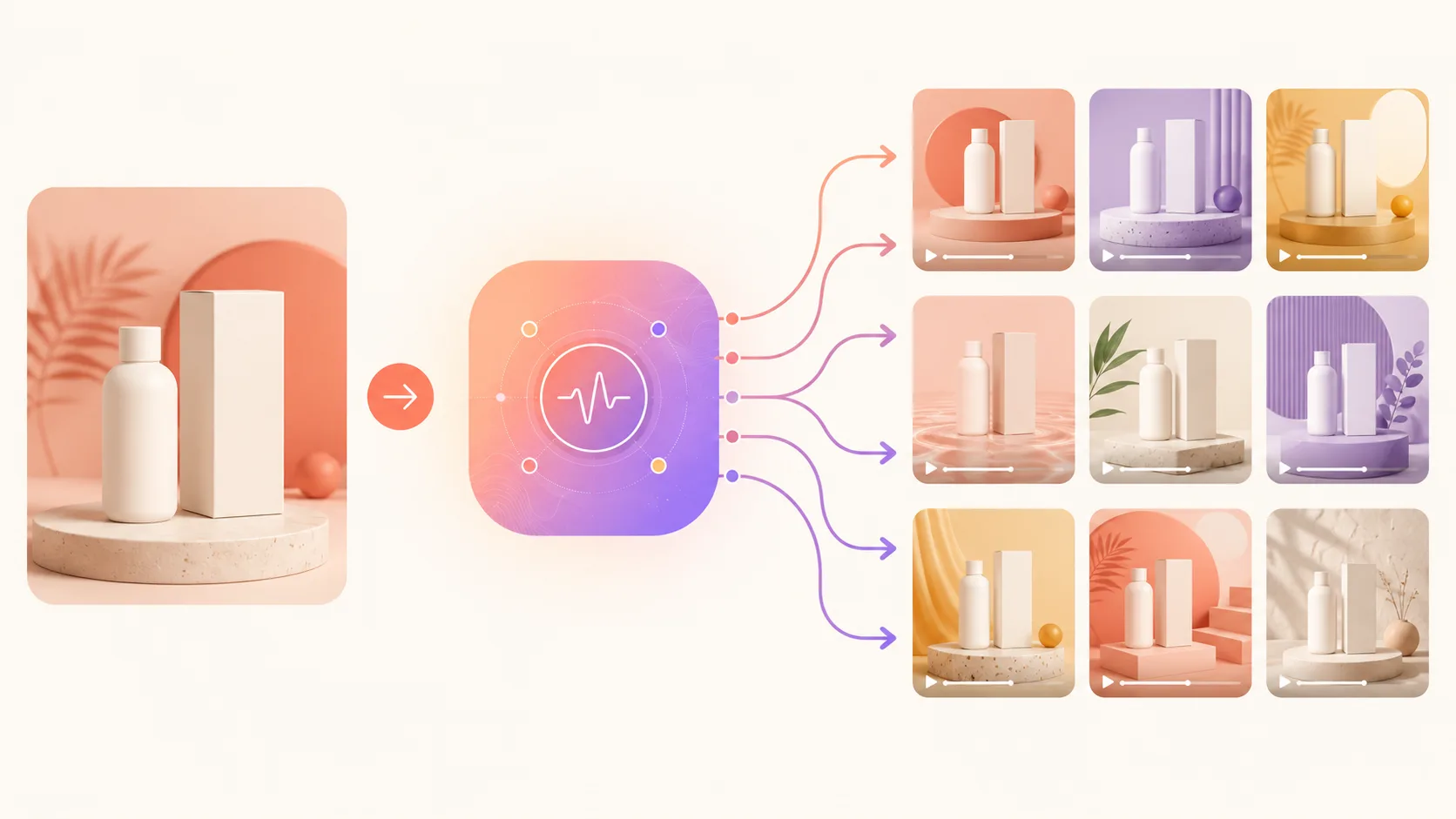
Built-in UGC Ad Generator for the ad-variant case. When the job is specifically "make 8 ad variants of this product photo with three different avatar personas," Lumigen's UGC Hub matches Creatify's batch mode and is included on the Ultra tier without a separate add-on.
What makes Lumigen uniquely strong for AI UGC ads
Beyond the UGC workflow, Lumigen covers script-to-video, AI avatars, voice cloning across 30+ languages, faceless YouTube automation, UGC ad generation, short-form vertical export, lip-sync correction, motion control, and frontier video models (Veo 3.1, Kling 3.0, Sora 2 Pro until its September 2026 sunset, SeeDance 2, Happy Horse 1.0) on the Ultra tier - in a single workflow. See pricing for the credit math.
Two capabilities matter most for the DTC use case:
Lip-sync correction on UGC avatar ads. The biggest tell of a 2024 AI UGC ad was the half-frame mouth-sync drift on the avatar's "hey guys" opening line. Lumigen runs a post-generation lip-sync pass that ties the avatar's mouth shapes to the actual voice phoneme, not the script's text. The output reads as a credible (if slightly stiff) human delivery instead of the uncanny-valley tell that Meta's ad review surfaces as low-quality.
30+ languages in the same project. Multilingual UGC ads were a manual-translation pain in 2024. With Lumigen, you write the script once, generate the English version, then re-generate the same script in Spanish, Portuguese, German, French, and 25+ other languages without leaving the project. The avatar's mouth re-syncs to the new audio automatically.
How to use Lumigen for AI UGC ads
Here's how we'd use Lumigen for a 30-second product UGC ad variant batch:
Pick the product and the persona
Drop the product photo (or Shopify URL) into the UGC Ad Generator. Pick the persona: millennial woman, Gen Z guy, older male, multilingual creator. The 50+ avatar library covers the standard DTC personas.
Generate the script
The script writer composes a 65-90 word UGC-style script tied to the product's value prop. Edit it - the first draft is rarely the final cut. Real UGC reads like a person, not a press release.
Pick the tier
Growth ($58/mo) for standard-tier visuals and avatars, Ultra ($166/mo) for Veo 3.1 / Kling 3.0 b-roll and the full avatar library. For Meta paid-social variant testing, Growth is usually enough; for hero campaigns that need to compete with professional UGC, Ultra. See pricing.
Generate 3-5 variants per brief
Run the same script with three different avatars (millennial woman, Gen Z guy, older male). Each variant generates in 3-6 minutes on standard tier, 5-10 on frontier-model tier.
Refine and re-roll
The first pass is rarely shippable. Re-roll any variant where the lip-sync slipped, the avatar's tone didn't land, or the b-roll missed. The 8-15 minutes spent on refinement is the highest-leverage time in the whole workflow.
Export 9:16 and 1:1 from the same project
Lumigen exports both formats natively. Upload 9:16 to Reels/TikTok/Shorts, 1:1 to Meta feed. The variant batch is ready for Meta's ad-set testing pipeline.
(Optional) Multilingual scaling
For each variant that performs, re-generate in 3-5 additional languages. The avatar's mouth re-syncs automatically; the script and audio swap.
For a 5-variant UGC ad set in English, the full loop is 35-55 minutes on Growth tier and 50-75 minutes on Ultra tier. For the same set scaled to 5 languages, add ~15 minutes per language.
Where Lumigen falls short
The honest constraints:
- No native Shopify integration. Creatify and several specialists (Shhots AI, Tagshop) have one-click "paste Shopify URL, get UGC ad" flows. Lumigen has the UGC Ad Generator but you bring the product photo manually. If the entire workflow needs to be Shopify-native, the specialists win.
- Avatar library is 50+, not 700+. For mainstream DTC personas, 50+ covers the standard archetypes. For niche personas (specific ethnic backgrounds, specific age brackets, specific industry uniforms), Creatify Pro's 700+ library and HeyGen's 240+ enterprise library have more depth.
- Frontier models gated to Ultra ($166/mo). Veo 3.1 and Kling 3.0 cost more credits per generation than standard models. The Ultra tier's 10,000-credit allowance accounts for this, but solo creators making 4-6 ads a month may find Starter at $33/mo (Hailuo standard-tier visuals) more economical.
- No A/B test analytics inside the tool. Lumigen ships the ads; the testing happens in Meta Ads Manager or your existing analytics stack. Specialists like Adstellar pair generation with built-in performance attribution.
- No "AI strategist" advisory layer. Some Creatify alternatives (Superscale, Koro) bundle a "what should this ad's hook be" strategist with the generation surface. Lumigen ships the production tool; you bring the strategy.
If you need a one-click Shopify-URL-to-ad workflow with built-in analytics, Shhots AI or Tagshop AI are better fits. If your entire ad budget is on niche personas Creatify's library doesn't cover, HeyGen's enterprise tier is the right step up. For everything else - DTC operators who want the UGC workflow PLUS the full AI video stack at one transparent price - Lumigen is the workflow we keep returning to.
Is Lumigen the right Creatify alternative for you?
Yes if: you want UGC ads PLUS the option to also produce script-driven video, faceless cinematic ads, or AI avatar explainer ads in the same tool; you want frontier-model output quality without enterprise pricing; and you want multilingual ad variants without a separate dub pass. No if: your entire workflow is Shopify-URL-to-UGC-ad-only, you need a 200+ avatar library for niche personas, or your budget is strictly $0 and you can tolerate watermarks. Start with the UGC Ad Generator and the script-to-video editor, or jump to pricing to find the plan that matches your ad volume.
2. Arcads: Best premium-actor library for UGC
Arcads is the specialist for premium AI-actor UGC ads. Its actor library is the most realistic in the category, and the output quality at the 30-45 second UGC length is consistently the strongest standalone result in our test. The trade-off is price (Pro tier sits at $110/month) and a deliberately narrow scope - Arcads ships UGC ad creative; it does not do faceless cinematic ads, script-to-video for product launches, or anything beyond the actor-talks-at-camera format.
vs Lumigen: Arcads wins on raw actor realism and the 6-minute time-to-first-export for a UGC ad; Lumigen's UGC Ad Generator covers the same actor-led UGC use case inside a broader workflow that also handles faceless ads, avatar-led explainers, and frontier-model cinematic b-roll without switching tools or paying for two specialists.
3. MakeUGC: Best low-cost ad-variant generation
MakeUGC wins on price-per-ad. Its starter tier ships UGC ad variants for roughly $0.85/ad, which is the cheapest finished cost across all 9 tools we tested. The output quality is good (not great) and the avatar library is smaller, but for DTC brands running variant-volume tests (50-100 ad variants per month for creative testing), the math is hard to beat.
vs Lumigen: MakeUGC wins on raw cost-per-ad and is the right choice for high-volume variant testing where output quality at the 7/10 bar is acceptable; Lumigen's UGC Ad Generator costs more per ad but ships at the 8.5/10 quality bar on Ultra tier with frontier-model b-roll, which is the right pick for hero campaigns and ads that need to compete with professional UGC.
4. HeyGen: Best enterprise avatar realism
HeyGen leads on avatar realism for talking-head ads and has the deepest enterprise-explainer avatar library (240+ avatars across age, gender, and corporate archetype). For B2B SaaS explainer ads, internal training UGC, and enterprise-compliant ad content, HeyGen is the obvious choice.
vs Lumigen: HeyGen wins on avatar library depth (240+ vs 50+) and corporate-archetype variety; Lumigen's AI Avatars cover the creator-archetype range without per-minute enterprise pricing, and unify avatar ads with frontier-model cinematic ads in one workflow. For DTC consumer-product UGC, Lumigen's avatar set is fully sufficient; for B2B enterprise explainers, HeyGen is the right pick.
5. Synthesia: Best for enterprise compliance + B2B ads
Synthesia is purpose-built for enterprise video with deep compliance posture (SOC 2 Type II, ISO 27001, GDPR documentation, SSO, audit logs). For ad creative bound by enterprise compliance (regulated industries: finance, healthcare, public sector), Synthesia is the obvious pick. The avatar library is 240+ and the enterprise contracts are negotiated annually.
vs Lumigen: Synthesia wins on compliance posture and enterprise rollout features (custom avatar packs, SSO, dedicated SLA); Lumigen wins on pricing flexibility (no annual enterprise commitment required), frontier video models, and creator-archetype avatar variety. See our Synthesia alternatives roundup for the full breakdown.
6. InVideo AI: Best long-form ad creative
InVideo AI sits in the middle ground between short-form UGC and long-form video editing. For ad creative that runs 60-180 seconds (YouTube pre-roll, longer testimonial-style ads, explainer demos), InVideo is the strongest pick. Its template library is broad and the editing surface is more flexible than UGC-specialist tools.
vs Lumigen: InVideo AI wins on long-form template variety and editing flexibility; Lumigen wins on time-to-publish for the standard UGC and script-to-video cases (no timeline editing required), and on access to frontier video models that InVideo's standard generation does not reach. We did a full head-to-head on this in our Lumigen vs InVideo AI comparison.
7. Pictory: Best for stock-footage-driven ads
Pictory is purpose-built for taking a text input (a blog post, a product description, a campaign brief) and converting it into video backed by stock footage. The model is "text-in, stock-Short-out" with templated transitions and a large stock-clip library.
vs Lumigen: Pictory wins on stock-library breadth and text-to-stock-video automation; Lumigen wins on original (non-stock) AI-generated visuals, frontier-model output, and the avatar/voice/captions unified workflow. Pictory is the right tool if your ads must be backed by stock and your script is the operator; Lumigen is the right tool if your ads should look like nothing else in the feed. See our Lumigen vs Pictory comparison for the detailed breakdown.
8. Tagshop AI: Best Shopify-native UGC workflow
Tagshop AI wins on Shopify integration. Paste a Shopify product URL, get a UGC ad with the product surfaced in the avatar's hand and the product detail page linked in the ad's CTA. For Shopify-first DTC brands that want a one-click URL-to-ad flow, Tagshop is the most frictionless workflow.
vs Lumigen: Tagshop wins on Shopify-native automation and product-data integration; Lumigen wins on cross-platform format flexibility (Tagshop is Shopify-focused; Lumigen exports for any platform), frontier-model b-roll, and the ability to extend beyond UGC into faceless and avatar-led video without switching tools.
9. Submagic: Best caption styling for UGC
Submagic is the standard for caption styling on UGC ads - the high-contrast, animated, word-by-word captions that became visual shorthand for 2024-2025 viral UGC. If captions are your ad's differentiator (and the rest of the ad is generated elsewhere), Submagic is the right specialist for the final styling pass.
vs Lumigen: Submagic wins on caption variety and styling depth; Lumigen's UGC Ad Generator includes auto-captions that handle the standard cases natively, and re-exporting through Submagic for a stylization pass is a 5-minute add-on if you want signature captions on a Lumigen-rendered UGC ad.
Lumigen capabilities for AI UGC ads:
- UGC Ad Generator - creator-style ad variants from a product photo or script, batch mode for variant testing
- Script-to-Video - script-driven video for product launches, hero campaigns, longer-form ads
- AI Avatars - 50+ realistic AI avatars across age, gender, and language
- Voices - 50+ AI voices across 30+ languages, ElevenLabs premium on Growth+
- Multilingual ads - re-generate the same ad in 30+ languages without leaving the project
- Short-Form Export - 9:16 vertical and 1:1 square export native, 16:9 landscape for pre-roll
- Lip-Sync - automatic mouth-shape correction for avatar UGC ads
- Frontier Models - Veo 3.1, Kling 3.0, Sora 2 Pro (until September 24, 2026), SeeDance 2, Happy Horse 1.0 on Ultra
See pricing for plan-level breakdowns.
How to choose between Creatify alternatives
The fastest decision tree if you want one tool and don't want to read all 9 reviews:
| If your bottleneck is... | Pick |
|---|---|
| End-to-end workflow (UGC + script-to-video + avatar) | Lumigen |
| Premium-actor realism on UGC | Arcads |
| Cheapest cost-per-ad at high volume | MakeUGC |
| Enterprise avatar library + compliance | HeyGen or Synthesia |
| Long-form ad creative (60-180 sec) | InVideo AI |
| Stock-footage-driven ads from text | Pictory |
| One-click Shopify URL to UGC ad | Tagshop AI |
| Signature caption styling on existing ads | Submagic |
| Frontier-model cinematic UGC | Lumigen Ultra (Veo 3.1, Kling 3.0) |
A useful filter: if your ad budget is below $500/month total (tools + paid social), the right pick is whichever tool gets you to 4-6 watermark-free finished ads per month at the cheapest tier. For most operators in that band, Lumigen Starter ($33/mo) or MakeUGC's entry tier are the right picks.
Above $2,000/month ad spend, the trade-off shifts. The cost of the generation tool is now <5% of total spend, so output quality (which compounds via click-through rate and conversion rate on the actual ads) is the dominant factor. Lumigen Ultra ($166/mo) with frontier-model visuals or Arcads Pro ($110/mo) with premium actors both clear that bar; cheaper specialists do not.
For DTC brands at $5,000+/month ad spend, the right answer is usually two tools: one for the bulk variant-testing (Lumigen Ultra or MakeUGC for volume) and one for the hero campaign creative (Arcads for premium actors, Lumigen Ultra for cinematic frontier visuals). The cheap-and-broad + premium-and-focused pairing matches how creative is actually allocated in performance marketing.
What none of these alternatives fix
A few honest constraints that hold across the whole category in May 2026:
Meta's ad review still flags AI-generated UGC unevenly. Even the cleanest AI UGC ads occasionally get flagged as "low-quality content" in Meta's automated review. The flag rate dropped significantly through 2025 as the generation tools improved, but it's not zero. Build a small buffer (5-10% extra variants) so a single flag doesn't break the campaign.
The "uncanny valley" returns in close-up shots. All 9 tools handle medium-shot UGC well. Tight close-ups (lip-level, eye-level) still surface subtle artifacts: micro-flickers on the iris, mouth-corner drift, occasional teeth-rendering misses. The pro workflow keeps avatar shots at medium distance and uses cinematic b-roll for close-ups.
A/B testing tools haven't caught up to AI-generation volume. Most performance marketers can ship 30+ ad variants in an afternoon now. Meta Ads Manager's standard A/B testing pipeline assumes 4-8 variants per test cycle. The bottleneck moved from creative production to creative iteration speed; the analytics layer hasn't kept up. Plan for a manual review of which variants are actually working, not just which one Meta's bandit picked.
Language coverage gets thin past 30+ languages. Lumigen and Fliki both ship 30+ languages, but quality drops off past the major commercial languages. For Mandarin, Brazilian Portuguese, German, French, Spanish, Italian, Japanese, Korean - the output is consistently strong. For Bahasa Indonesia, Vietnamese, Thai, smaller European languages - quality is noticeably more variable. Test before committing budget.
Pricing comparison
A snapshot of the cheapest watermark-free tier across the 9 alternatives we tested (May 2026, USD, billed annually unless noted):
| Tool | Cheapest watermark-free tier | Monthly ad allowance |
|---|---|---|
| Lumigen Starter | $33/mo | ~18-25 ads (Hailuo standard tier) |
| Lumigen Ultra | $166/mo | ~50-70 ads (frontier models) |
| Creatify Starter | $19/mo | ~10-15 ads (standard quality) |
| Creatify Pro | $49/mo | ~25-40 ads (Pro tier, batch mode) |
| Arcads Pro | $110/mo | ~30-40 ads (premium actors) |
| MakeUGC entry | $29/mo | ~30-50 ads (basic quality) |
| HeyGen Creator | $29/mo | ~20-30 minutes of avatar video |
| Synthesia Personal | $30/mo | 10 minutes/month (avatar only) |
| InVideo AI | $30/mo | 50 generations/month (AI-generated) |
| Pictory Starter | $25/mo | 30 videos/month (up to 10 min each) |
| Tagshop AI | $39/mo | 30 product-URL-to-ad generations/month |
| Submagic Essential | $20/mo | unlimited caption styling (BYO video) |
Treat these as anchors, not gospel - all tools adjust pricing several times per year, and most have an annual-billing discount of 15-25% versus monthly. The relative ordering is more stable than the absolute numbers.
Verdict
For most DTC operators looking to replace Creatify in 2026, the right answer is Lumigen on the Growth tier ($58/mo) if you're starting and want one tool to handle UGC plus the rest of the AI video stack, or Lumigen Ultra ($166/mo) if your ad spend justifies frontier-model cinematic UGC. Both tiers cover the UGC ad-variant case Creatify is best known for and extend beyond it into script-to-video, AI avatars, and multilingual scaling without switching tools.
Use the other tools where they're genuinely stronger - Arcads for premium-actor realism on UGC-only workflows, MakeUGC for high-volume cheap variant testing, HeyGen for enterprise-compliant avatar explainers, and Submagic for signature caption styling on otherwise-finished ads. But if the question is "what's the fastest path from a product photo to 5 publish-ready UGC ad variants with the option to also produce non-UGC video creative from the same tool?" - start with the Lumigen UGC Ad Generator or jump to pricing to find the plan that matches your ad volume.
The 2026 reality: Creatify is a strong specialist, but most DTC operators outgrow the specialist tier within 2-3 months of consistent ad-variant production. The next step is a pipeline tool that handles UGC plus everything else. Lumigen is the workflow we kept returning to across the 14 test briefs.
Frequently asked questions
For free-tier UGC ad generation, MakeUGC's free tier (~3 ads/month with watermark) and Creatify's own Free Plan (10 monthly credits, watermarked) are the standard options. For free-tier full-pipeline AI video, CapCut's AI templates are the best of the $0 tier. The honest answer for serious testing: free tiers don't reach 2026 ad-quality output. The cheapest path to watermark-free 2026-quality UGC is roughly $19-33/mo (Creatify Starter or Lumigen Starter).
MakeUGC ships the cheapest finished UGC ad in our 14-brief test - roughly $0.85 per finished watermark-free ad at its entry tier, versus a median of $3.20 across the other 8 alternatives. The output quality clears the "good for variant testing" bar but is below the "hero campaign creative" bar. Use MakeUGC for high-volume variant testing where 50-100 ads/month is the goal and quality at the 7/10 level is acceptable. For hero campaigns where the same ad runs at scale for weeks, the cost-per-ad math matters less than the output quality, and Lumigen Ultra ($166/mo with frontier models) is the right step up.
Less often than in 2024, but not zero. Meta's automated review still flags AI-generated UGC occasionally as "low-quality content," especially when the avatar's lip-sync drifts visibly or the b-roll looks like obvious AI generation. The flag rate dropped substantially through 2025 as tools added lip-sync correction passes (which Lumigen's avatar workflow runs automatically) and the frontier video models improved. Build a 5-10% buffer of extra variants so a single flag doesn't break the campaign, and avoid extreme close-ups where avatar artifacts surface.
For native multilingual support across 30+ languages without a separate dub pass, Lumigen and Fliki are the two strongest picks. Both let you re-generate the same script in multiple languages without leaving the project. Quality is consistently strong across the major commercial languages (Spanish, Portuguese, German, French, Italian, Japanese, Korean, Mandarin) and noticeably more variable past those. HeyGen also supports multilingual avatar video but at enterprise-tier pricing. Creatify itself supports a smaller subset of languages and the Pro tier is required for batch multilingual generation.
Yes, and the best Shopify-native workflow is Tagshop AI - paste a Shopify product URL, get a UGC ad with the product surfaced. For a broader workflow that handles Shopify product ads plus other formats, Lumigen's UGC Ad Generator accepts product photos directly (you bring the asset, not the Shopify URL) and lets you generate the ad, plus optional script-to-video product launches, plus avatar explainer ads from the same tool. We covered the Shopify-specific playbook in AI video ads for ecommerce.
For B2B SaaS ad creative (LinkedIn, YouTube pre-roll, enterprise email campaigns), the right pick depends on the format. For talking-head explainer ads with a corporate-archetype avatar, HeyGen or Synthesia are the strongest. For script-driven explainer videos with cinematic b-roll, Lumigen on the Growth or Ultra tier is the right pick. For UGC-style ads with a professional spokesperson (a B2B use case that's emerging in 2026 as enterprise software companies test consumer-marketing tactics), Arcads or Lumigen's UGC workflow both fit.
The 2026 sweet spot is 8-15 variants per ad set in the first test cycle, narrowed to 3-5 winners by week 2. Below 8 variants, you don't get enough signal to confidently pick winners; above 15, Meta's bandit algorithm under-allocates to your tested ads and the data gets noisy. The volume-friendly pipeline tools (MakeUGC for cheap, Lumigen UGC Generator for pipeline-integrated) both handle the 8-15 variant batch comfortably in a single afternoon's work.
Related reads
Same prompt.
Four models.
One project.
Sora 2, Veo 3.1, Runway Gen-4, Kling 3.0 — side by side, with a free tier that's actually useful for evaluation. Three videos at full quality, no watermark, no minute cap.

Vlad
Founder of Lumigen. Has shipped tens of thousands of generations across Sora 2, Veo 3.1, Runway Gen-4, and Kling 3.0 — and edits everything published here against that hands-on test bed.